
Decoding and Soothing Your Body’s Stress Signals
Why some days feel impossible - and what to do about it

Video Teaser for my Pint of Science Talk on the Topic
This video was created with the support of InvestNScience, a wonderful team of volunteer scientists dedicated to bringing quality science communication to the public.
Video of My Talk
For a video of my recent Pint of Science talk on the topic, click here.

Text Version
Have you ever wondered why some days everything just flows, while other days the exact same work feels impossible?
Some days you’re engaged, creative, handling challenges with ease. Your relationships feel light. You have patience for people.
Other days? You’re scrambling, exhausted, irritable. The people you love can’t do anything right without triggering you.
Same job. Same people. Completely different experience.
For years, I thought being organized and enjoying my work was enough. I had systems, I loved what I did, and I thought I had it handled. Then my body put the emergency brakes on. Hard. And I had no idea it was happening. Surely, I could get my body under control, right? I was shocked to be trapped in an extended experience in which I had no control over any part of my body. My muscles were weak and trembling, I had time when I was crying uncontrollably without knowing why, and I couldn’t make a single step forward.
That’s when I learned: the answer isn’t in what’s happening around us. It’s in what’s happening inside us - specifically, in how our nervous system responds to our demands.
If I had understood my body’s signals sooner, and respected its boundaries and capacities, I could have prevented this. Sometimes, we have to learn the hard way. Your body knows how to slow you down, but I don’t recommend letting it get that far.
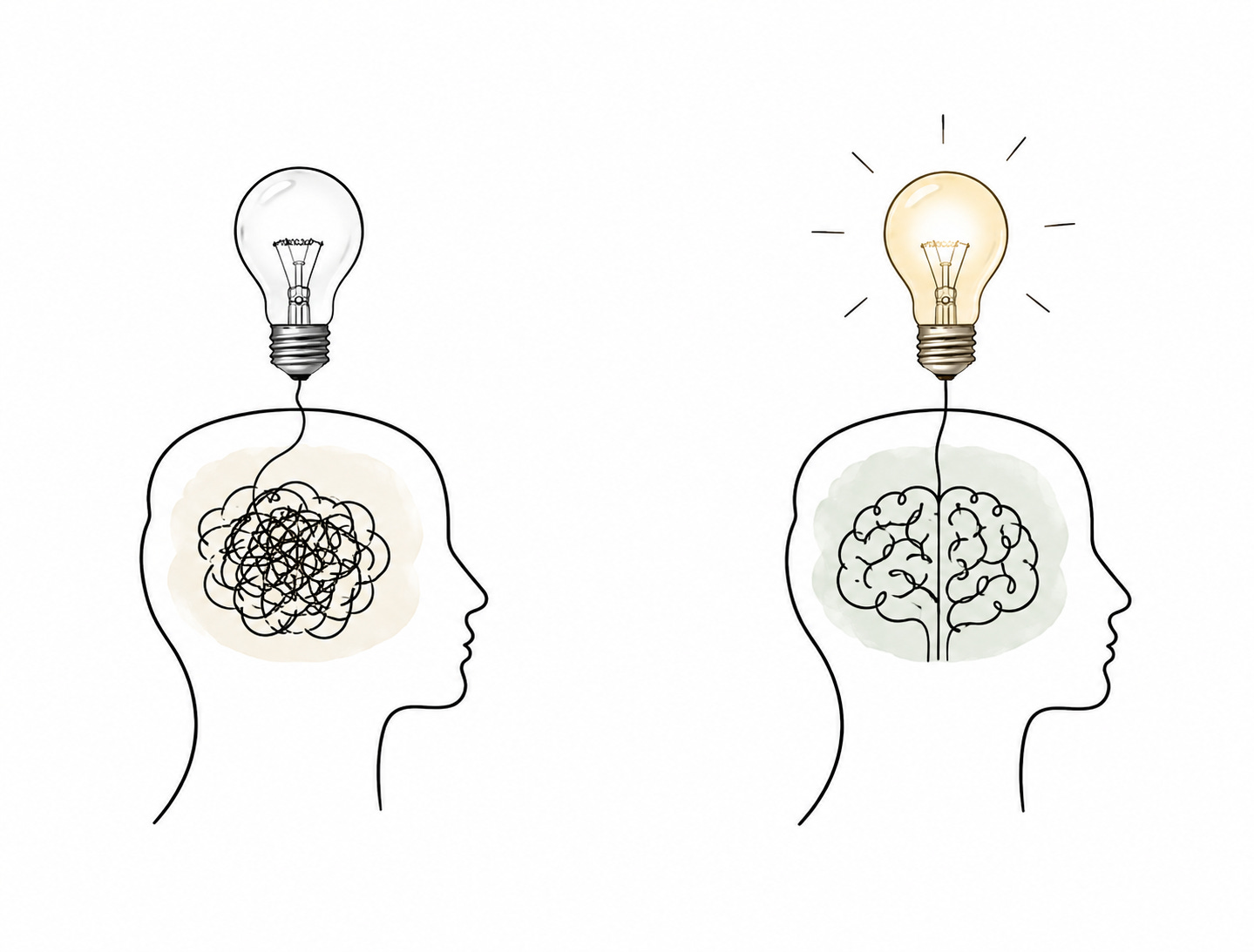
The Hidden System Running Your Life
Here’s what’s happening under the surface that most people never learn:
Our brains evolved to detect threats. That worked great when threats were occasional - a predator or a storm. But our modern world trips our alarm system constantly.
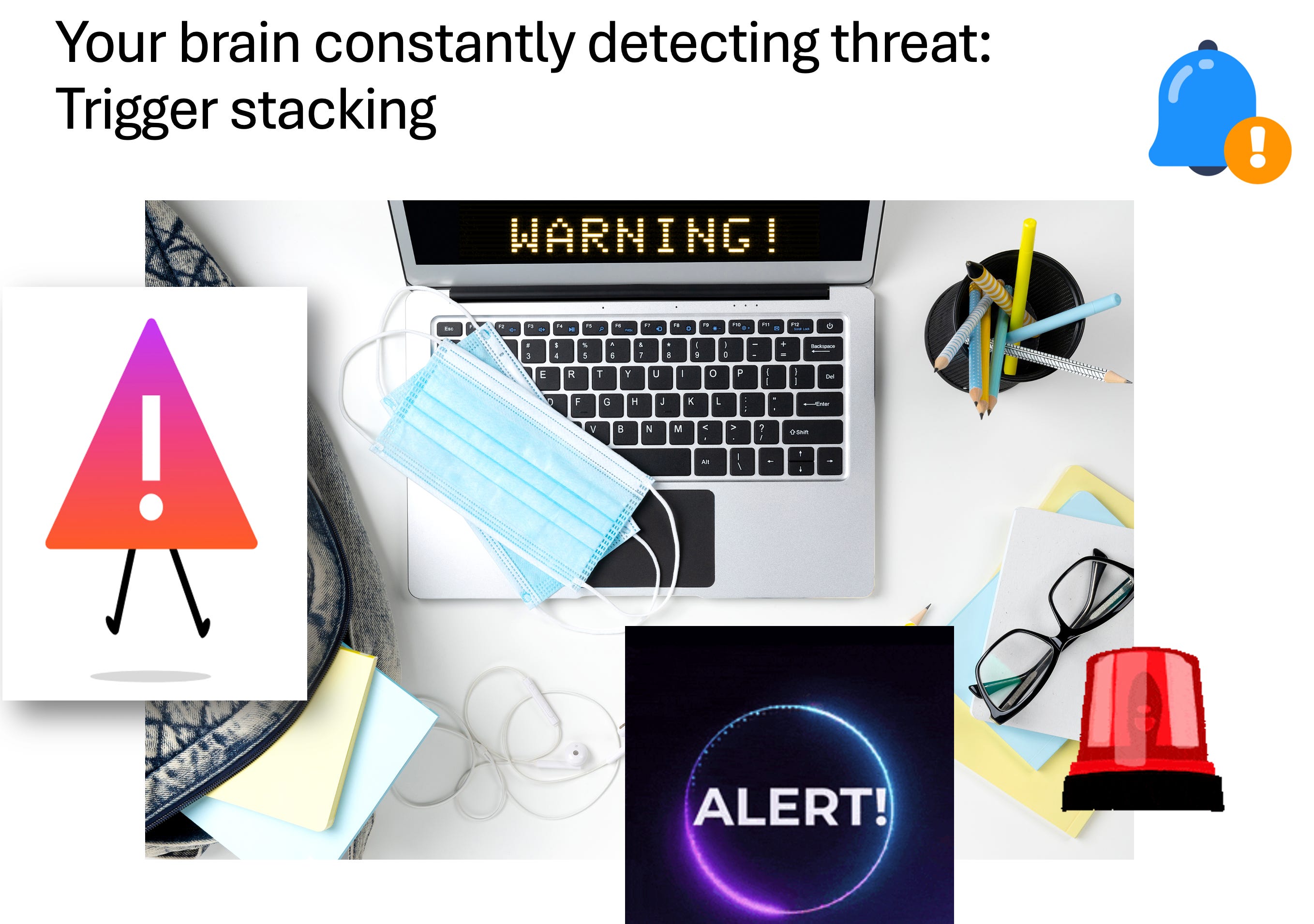
Each trigger might be small: an email notification, traffic, a tight deadline, someone’s tone in a meeting. One alarm? Not a problem. Your system handles it. Once you’re in a stressed state, you become hypervigilant to stressors and react more sensitively to each and every single one of them.
Also, the alarms stack. They pile up. It’s called trigger stacking. And most of us never hit the reset button between them. You’re being buried in alarms and triggers. Most of the time, we try to keep going as usual, just now at 180 mph. Your body is running on high fumes, but it feels like nothing gets done.
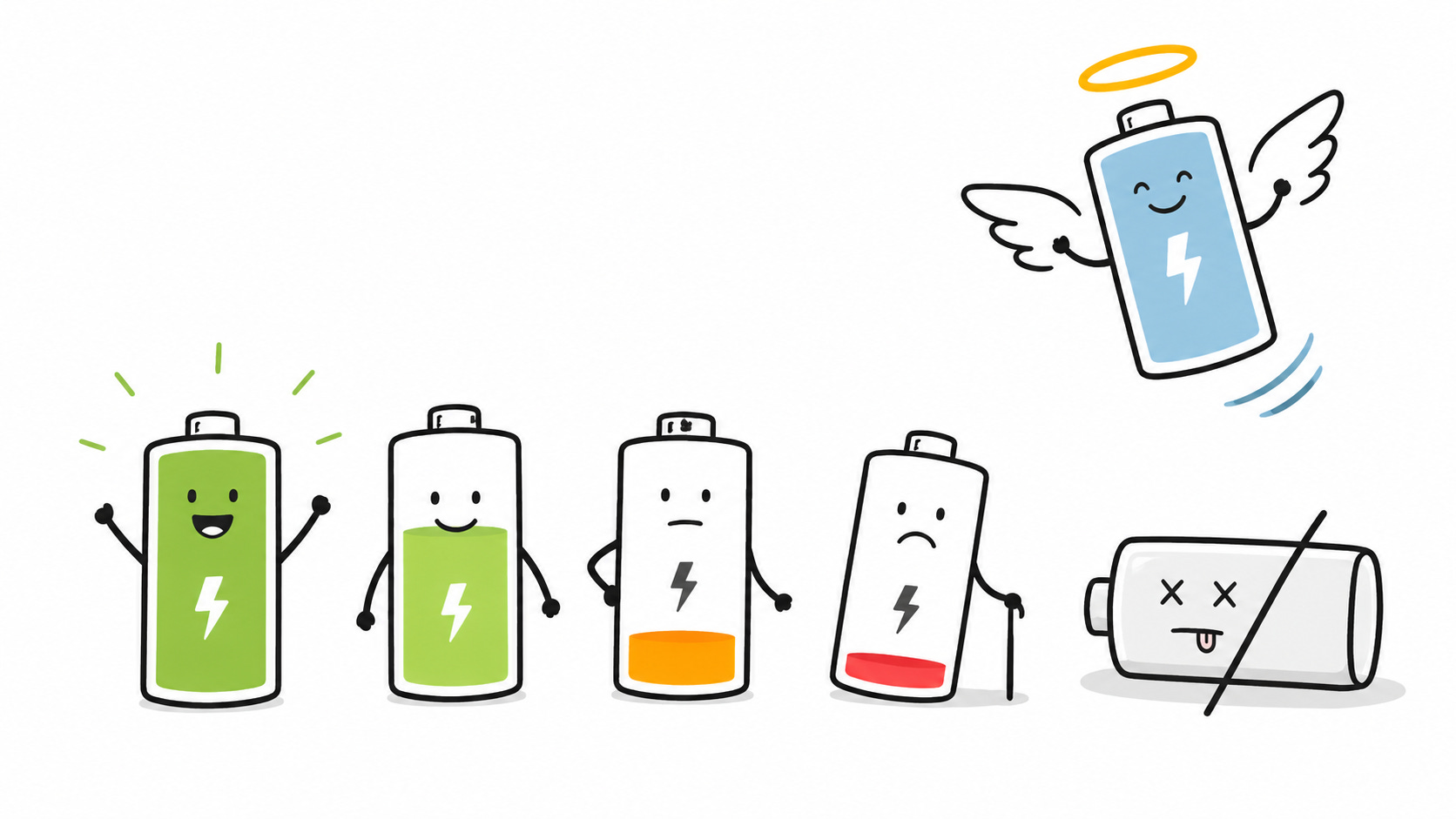
Your Battery is Draining
Think of your nervous system like your phone battery.
That text notification? 2% drain
Difficult conversation with your partner? 5%
Poor sleep last night? 10%
Skipped or delayed lunch? 3%
Back-to-back meetings all day? 8%
Individually, no big deal. But by 3pm, you’re running on 15% of your battery power and you don’t even know why. The same activities usually work fine, so let’s pull ourselves together and get through it! Right?
Wrong.
Your conscious mind doesn’t track this decline in battery power. But your body does. It’s been keeping score all along. Your mind is still in operating mode, but your body has already gone into power-save mode and there isn’t much left to give. Tomorrow isn’t going to start at 100%, tomorrow is going to start at 20%. And then the story continues.
The Signals You’re Missing
Most of us can recognize when we’re really stressed. But can you catch it early - like, in the first 30 seconds of it building?
Probably not. Most of us don’t notice until we’re already overwhelmed.
Your body has been trying to tell you. You’ve just been missing the language.
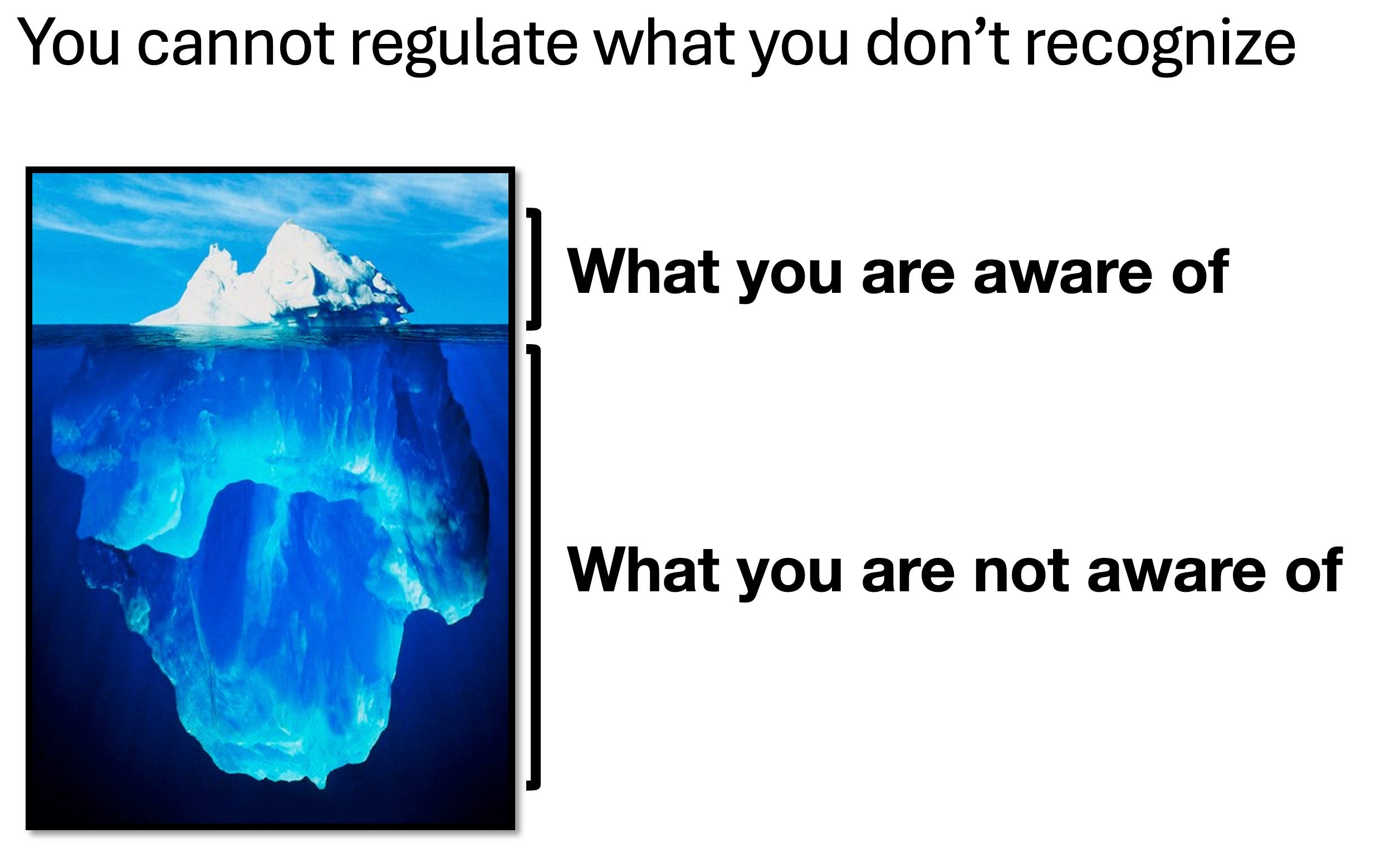
The Iceberg Metaphor
What we notice - the tension headache, snapping at people, brain fog - is just the tip of the iceberg. The obvious stuff that finally gets our attention after you missed 150 more subtle signals.
Underneath, there’s a whole system of signals we’re not accessing: subtle shifts in breathing, heart rate, muscle tension, digestion, emotions, and thoughts.
The good news: you can learn to read what’s below the surface. And when you do, you can respond way before things escalate.
The Three Zones of Your Nervous System
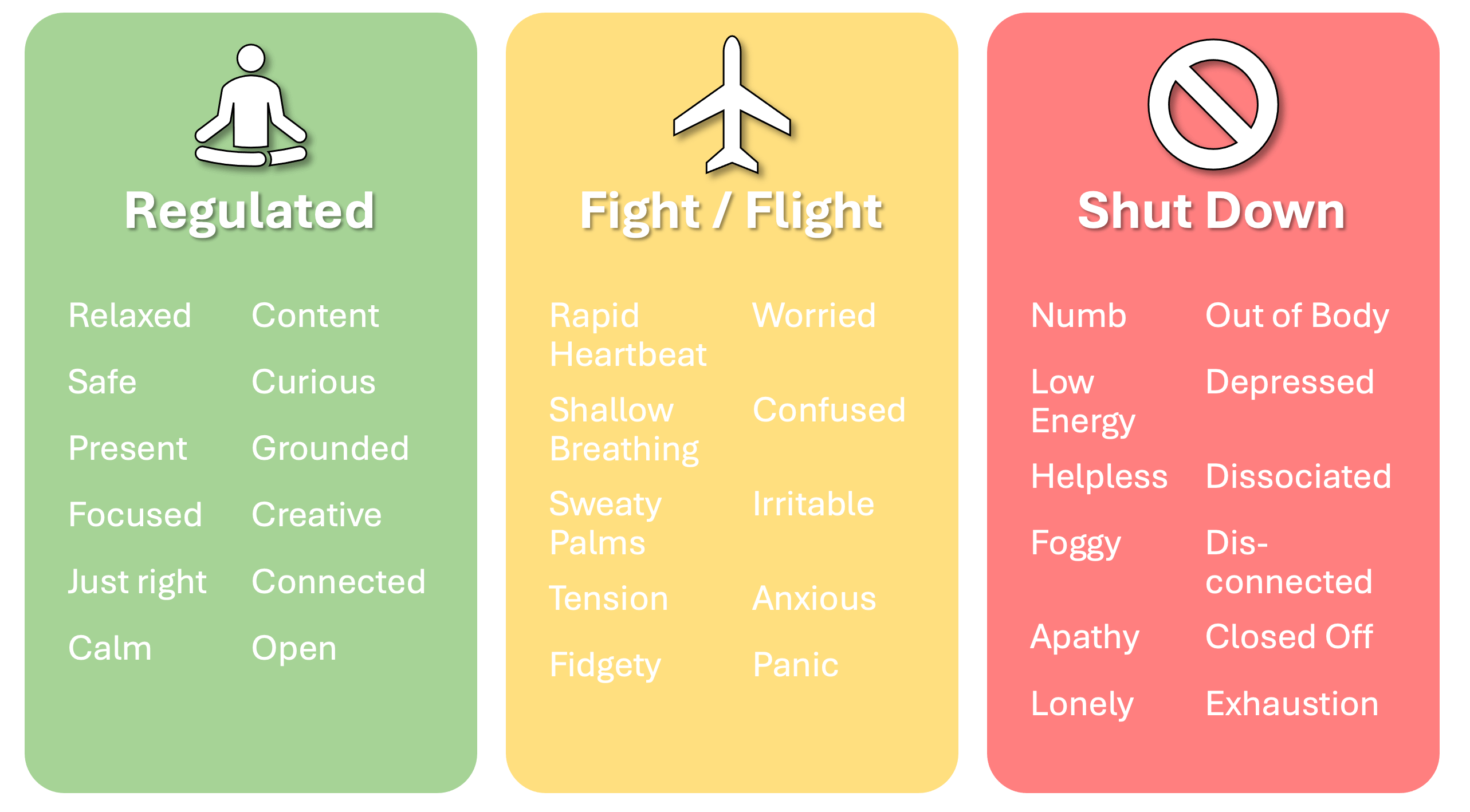
Your nervous system operates in three distinct states. Think of them as zones: green, yellow, and red.
Green Zone: Regulated
You feel calm, focused, creative. You can connect with people. Challenges feel manageable. This is your optimal functioning state.
Yellow Zone: Fight-or-Flight
You’ve tipped into survival mode. You’re anxious, irritable. Your thoughts are racing. Your muscles are tense. You’re scanning for threats, even when there aren’t any.
Red Zone: Shutdown
Stay in yellow long enough, and you can drop into shutdown. This is where you feel numb, foggy, exhausted, completely checked out. Many people don’t even know this zone exists, so they think something’s wrong with them when it happens.
The Game-Changer Most People Never Learn
Here’s what’s crucial: when you’re in yellow or red, you cannot think your way back to green.
When you’re stressed, your prefrontal cortex - your logical, reasoning brain - is offline. That’s why “just calm down” doesn’t work. Why positive thinking fails when you’re overwhelmed. Why you can know intellectually that the deadline isn’t life-or-death, but still feel panic.
Your thinking brain is offline. Your battery charger is broken.
How do you get it back?
How to Know When Stress Is Releasing
Before we get into the techniques, you need to know what success actually looks like.
When stress releases from your system, you might:
Yawn or sigh deeply (even though you’re not tired)
Your muscles pop and loosen, your posture may relax and perk up
Notice your stomach gurgling
Feel waves of warmth
Your eyes may start watering, but not you’re not sad - these are release tears
Shake or tremble slightly, like animals do after a stressful event
Your heart may become softer and quieter, just as your mind
These are signs you’re on the right track - your nervous system is successfully discharging stress. This can be one small signal at a time. But now you know whatever you did is working for your own individual nervous system.
The Four-Step Framework
Most stress management only teaches emergency techniques. That’s why it doesn’t stick. You need a complete system.
Step 1: Awareness
First, you need to learn to identify which zone you’re in right now.
This is called interoception - sensing what’s happening inside your body. Most of us are way better at reading a stop sign than feeling our own heart rate change.
Start by noticing body sensations:
· In green: Relaxed shoulders, easy breathing, soft belly, warm hands
· In yellow: Tight chest, shallow breathing, clenched jaw, butterflies, racing heart
· In red: Heavy limbs, numbness, can’t feel much, disconnected from your body
Your emotions, thoughts, and behaviors also give you clues. But body sensations are your earliest warning system. I will write a separate article about the associated emotions, thoughts, and behaviors at a later time.
Step 2: Identify Your Triggers
Figure out what’s actually draining your battery. This is a little bit like detective work; you may have already spent decades not knowing what triggers your stress system, so now it can be hard to identify your triggers. But don’t worry, you will get there, it just takes practice. Every time you detect a negative sensation, thought, or emotion, ask yourself what preceded this.
I personally do not enjoy journaling whatsoever, but what has really helped me is to keep a journal, scan it, upload a complete pdf of it into a large-language model, and ask what it has noticed. And then I found out I had physical symptoms every time I had an interaction with a specific person, or I would start shutting down every time before a specific type of event. This was a big aha moment. Now I can’t unsee it and it is much easier to know the triggers, to prepare for them, and to regulate in the moment before the problem even arises.
And here’s what surprises people - it’s usually not the big stuff. It’s not the major deadline or the family crisis.
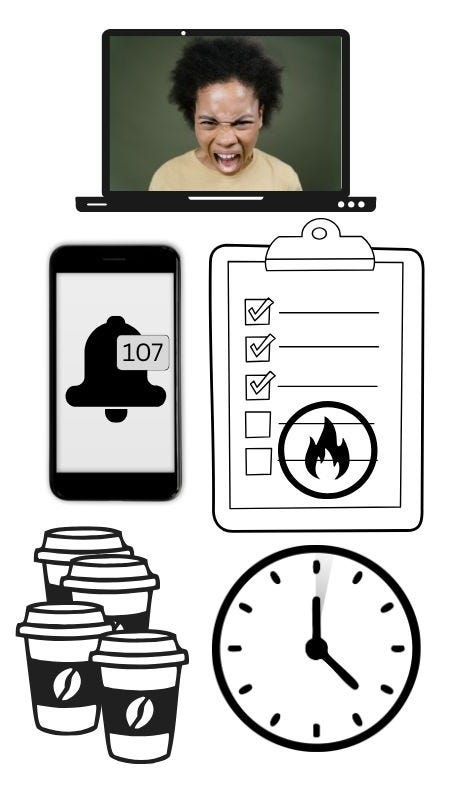
Science shows it’s the everyday stuff that gets you (I previously wrote about these in more detail here):
Message notifications
Long, overwhelming to-do lists
That third (or fifth) cup of coffee
Back-to-back meetings with no break
Unresolved arguments
Poor sleep
Skipped meals
Each one seems manageable. But again, they’re stacking.
Step 3: Reduce What You Can
You can’t eliminate stress - life happens. Some of the things you are doing may need to happen. But you can reduce unnecessary drains.
Ask yourself:
Can I silence notifications for part of my day?
Can I break that overwhelming to-do list into smaller chunks?
Can I block 15 minutes between meetings?
Can I schedule time that’s actually protected - where no one has access to me?
Can I communicate my needs and boundaries more clearly in social interactions?
These are small changes, but they make a big difference in your baseline stress load and they might shave a good portion of load off you if you do them daily.
Step 4: Learn Body-Based Regulation Techniques
You can’t think your way calm - but you can breathe your way there. You can hum your way there. Science has come a long way to show us which techniques really make a difference, and they don’t need to involve years of work in therapy. That being said, I recommend everyone who feels overwhelmed to find a therapist they are comfortable with, and start working on patterns in their lives that might have been helpful at some point, but no longer suit them.
Three Techniques That Actually Work
1. The Physiological Sigh
This is what your body does naturally after you cry. For a guided exercise by Stanford neuroscientist Dr Andrew Huberman, please see here.
How to do it:
Breathe in through your nose
When you think your lungs are full, sip in a little more air
Let it all out through your mouth with an audible sigh
That’s it. Watch what happens in your body. Did your shoulders drop? Did your jaw unclench? Did you start feeling more space in your chest?
This is a short, but powerful exercise you can even do in the presence of others and without it being noticed.
2. The Butterfly Hug with Head Turns
This technique is used in trauma therapy, but it works beautifully for everyday stress (I quite like this guided video here).
How to do it:
Cross your arms over your chest
Place hands on opposite shoulders
Tap alternating sides, like a slow heartbeat (about one tap per second or every two seconds)
While tapping, slowly and gently turn your head all the way to the right
Pause here for a few seconds, then slowly turn all the way to the left
Repeat a few times
The bilateral stimulation tells your brain “I’m safe right now.” The head turns release tension in the vagus nerve running through your neck.
3. Humming
Your vagus nerve is the main nerve of your parasympathetic (rest-and-digest) system. It runs right past your vocal cords. When you hum, you’re quite literally massaging it with vibration.
How to do it:
Take a breath in
On the exhale, hum (“hmmmmmm”) at whatever pitch feels comfortable
Feel the vibration in your chest and throat
Repeat 3-4 times
You’ve just activated your body’s built-in calm button.
What This Looks Like in Real Life
If you continuously apply the four steps in your real life, you will quickly notice a difference (even better if you also have a therapist at your disposal). Let me paint you two scenarios:
Without Tools:
9am: Email from boss → tension builds
10am: Spill coffee → frustration spikes
11am: Deadline reminder → anxiety kicks in
12pm: Colleague asks question → snappy response
2pm: Can’t focus → scroll phone
4pm: Exhausted, nothing accomplished
6pm: Go home and snap at family
With Your 4 Steps And Tools:
9am: Email from boss → notice tension → physiological sigh → respond clearly
10am: Spill coffee → catch frustration rising → butterfly hug 30 seconds → clean up, move on
11am: Deadline reminder → check in, realize yellow zone → hum while working → stay focused
2pm: Feeling scattered → recognize red zone signs → regulate for 2 minutes → back to green
6pm: Go home with energy left for family
Same day. Same stressors. Different nervous system management. This is the difference we’re talking about. You’re the same person, but you operate in a different mode, which comes with different sensations, emotions, and thoughts. Experimenting with these techniques will teach you to recognize the signs faster and also respond faster to the regulation techniques.
The Bottom Line
You don’t need an hour of meditation. You can do some simple and quick regulation exercises, multiple times a day, before stress accumulates.
Learning which situations trigger you can help you to either cut the situations out of your daily life or change your relationship with them.
Most people think their body is the problem - the tension, the exhaustion, the overwhelm. But your body is actually the solution you’ve been ignoring.
It’s been sending you signals all along and it is trying to help you protect your physical and mental boundaries. This is a really good thing and a sign your body is working well! You’re just learning its language now. Welcome the signs and connect with your body more. Your body can’t just be controlled, it needs to be cared for.
The stress will keep coming. But now you know: you have tools.
Use them before your body forces you to.
Start today.
What zone are you in right now? I’d love to hear what you discover when you start checking in. Leave a comment below.
If this article helped you, please share it with someone who needs to hear this message. And if you want more practical neuroscience for everyday life, subscribe below - I share tools and lessons like this every week.
References and recommended reading:
Balban MY et al. (2023). Brief structured respiration practices enhance mood and reduce physiological arousal. Cell Rep Med., 4(1):100895.
Armstrong A (2024). Healing Through the Vagus Nerve: Improve Your Body’s Response to Anxiety, Depression, Stress, and Trauma Through Nervous System Regulation. Fair Winds Press.
Porges SW & Porges S (2023). Our Polyvagal World: How Safety And Trauma Change Us. W. W. Norton & Company.
Trivedi G et al. (2023). Humming (Simple Bhramari Pranayama) as a Stress Buster: A Holter-Based Study to Analyze Heart Rate Variability (HRV) Parameters During Bhramari, Physical Activity, Emotional Stress, and Sleep. Cureus. 15(4):e37527.
The BBC has created several helpful information videos:
· Tapping
· Humming
“Each trigger might be small: an email notification, traffic, a tight deadline, someone’s tone in a meeting. One alarm? Not a problem. Your system handles it. Once you’re in a stressed state, you become hypervigilant to stressors and react more sensitively to each and every single one of them.” Thank you for sharing this part. Anything subtle actually signifies a deeper challenge.
I like your battery example. It makes it a fun way to progress.
Also great way of explaining how our minds work and how our bodies react.